
Contact Our Firm
770-271-2991
How Long Does Divorce Take in Georgia?
MORE THAN ATTORNEYS
WE'RE ADVOCATES
How Long Does Divorce Take in Georgia?
One of the most common questions people ask during the divorce process is, “How long does divorce take in Georgia?” The answer depends on several factors, including whether the divorce is contested or uncontested, the complexity of the issues involved, and how willing both parties are to cooperate.
Some Georgia divorces may be finalized in as little as a few weeks, while others can take many months or even longer. Understanding the divorce timeline can help individuals and families better prepare for the legal, emotional, and financial aspects of the process.
If you are considering divorce in Georgia, speaking with an experienced family law attorney can help you understand what to expect and how to protect your rights throughout the process.
The Minimum Time for Divorce in Georgia
Georgia law requires a minimum waiting period before a divorce can be finalized.
After the divorce petition is filed and properly served, there is generally a mandatory waiting period of at least 31 days before the court can finalize the divorce.
However, while 31 days is technically the minimum timeline, most divorces take longer depending on the circumstances.
How Long Does an Uncontested Divorce Take in Georgia?
An uncontested divorce is usually the fastest type of divorce in Georgia.
In an uncontested divorce:
- Both spouses agree to divorce
- There is agreement on major issues
- The parties cooperate throughout the process
These agreements often include:
- Division of property and debts
- Child custody and visitation
- Child support
- Alimony or spousal support
When paperwork is completed correctly and both parties are cooperative, uncontested divorces in Georgia may sometimes be finalized within:
- 31 to 60 days
- A few months depending on court schedules
Court availability and county-specific procedures can also impact timing.
How Long Does a Contested Divorce Take?
A contested divorce usually takes significantly longer.
A divorce becomes contested when spouses disagree about one or more major issues, including:
- Child custody
- Parenting plans
- Division of assets
- Alimony
- Child support
- Business ownership
- Retirement accounts
Contested divorces in Georgia may take:
- Several months
- One year or longer in complex cases
The more disputes involved, the longer the process may become.
What Happens After the Divorce Is Filed?
The general divorce process in Georgia may include:
Filing the Divorce Petition
One spouse files a Petition for Divorce with the appropriate Georgia court.
Service of Process
The other spouse must be formally served with the divorce paperwork.
Response and Negotiations
The responding spouse may file an answer, and negotiations often begin regarding property, custody, and support issues.
Temporary Hearings
Some cases require temporary court orders addressing:
- Child custody
- Temporary support
- Living arrangements
- Financial responsibilities
Mediation or Settlement Discussions
Parties may work toward resolving disputes outside of trial.
Trial (If Necessary)
If no agreement is reached, the case may proceed to trial where a judge decides unresolved issues.
Final Divorce Decree
Once all issues are resolved, the court issues a Final Judgment and Decree of Divorce.
Is Every Georgia Divorce Different?
Yes. No two divorce cases are exactly alike. Some divorces are resolved quickly and amicably, while others involve complicated legal disputes that require substantial time and court involvement.
The length of a divorce often depends on:
- The complexity of the case
- The level of conflict
- Financial circumstances
- Parenting disagreements
- Court availability
Speak with a Georgia Divorce Attorney
If you are considering divorce in Georgia, understanding your legal rights and options early can make a major difference in the outcome of your case. An experienced Georgia family law attorney can help guide you through the process, explain realistic timelines, and work to protect your future throughout every stage of the divorce.
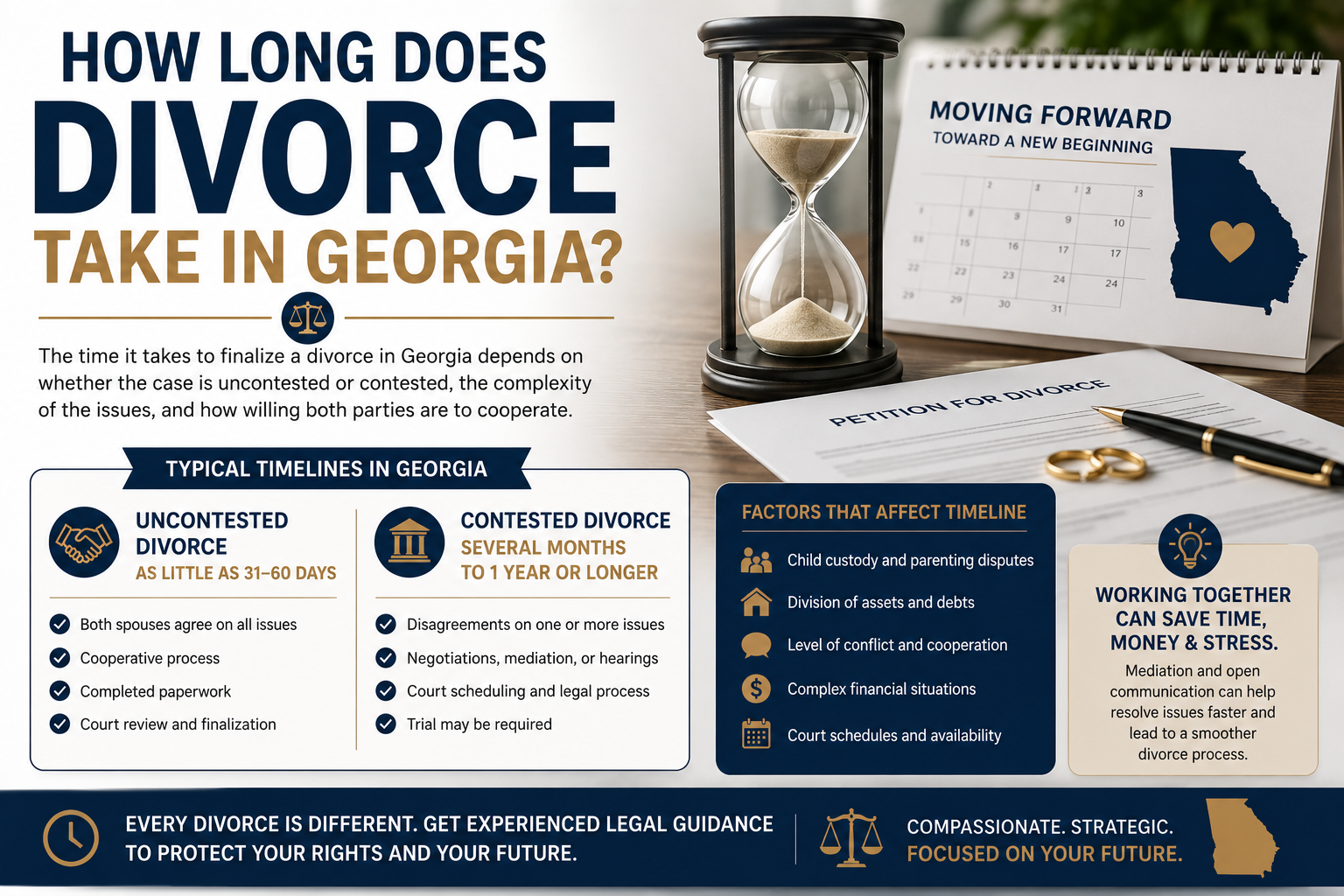
Factors That Can Affect Divorce Timelines in Georgia
Every divorce case is different. Several factors may influence how long the process takes.
Child Custody Disputes
Cases involving child custody and parenting disagreements often require additional:
- Negotiations
- Mediation
- Court hearings
- Evaluations
Georgia courts prioritize the best interests of the child, which can extend the timeline when custody issues are heavily disputed.
Division of Assets and Debts
Dividing marital property can become complicated, especially when couples own:
- Businesses
- Real estate
- Investments
- Retirement accounts
- High-value assets
The more complex the financial situation, the more time may be needed to evaluate and divide assets fairly.
Court Scheduling Delays
Court calendars can vary significantly by county in Georgia. Some counties have heavier case volumes, which may delay hearings and final court dates.
Metro Atlanta courts and larger Georgia counties may experience longer scheduling timelines compared to smaller counties.
Cooperation Between Spouses
One of the biggest factors affecting divorce speed is the willingness of both spouses to cooperate.
Divorces generally move faster when parties:
- Communicate effectively
- Provide requested documents promptly
- Participate in negotiations
- Work toward reasonable resolutions
High-conflict divorces often take much longer.
Discovery and Financial Investigations
In some divorces, attorneys may conduct discovery to gather financial information and evidence. This process may include:
- Document requests
- Depositions
- Financial disclosures
- Business valuations
Discovery can add substantial time to a divorce case.
Can Mediation Speed Up a Georgia Divorce?
Yes. Mediation often helps divorcing spouses resolve disputes more efficiently without going to trial.
During mediation:
- A neutral third party helps facilitate discussions
- Couples attempt to negotiate agreements
- The process remains more private than court litigation
Successful mediation can often reduce:
- Legal costs
- Court delays
- Emotional stress
- Overall divorce timelines
Many Georgia courts encourage or require mediation before trial.