
Contact Our Firm
770-271-2991
What Is the Difference Between a Will and a Trust?
MORE THAN ATTORNEYS
WE'RE ADVOCATES
What Is the Difference Between a Will and a Trust?
When planning for the future, many people ask an important estate planning question: “What is the difference between a will and a trust?” While both tools help protect your assets and provide instructions for your loved ones, they work in very different ways.
Understanding the differences between wills and trusts can help Georgia families make informed decisions about protecting their property, minimizing stress for loved ones, and creating a clear plan for the future.
Whether you are creating your first estate plan or updating an existing one, knowing how wills and trusts function under Georgia law is an important step toward protecting your family and your legacy.
Main Differences Between a Will and a Trust
Although wills and trusts share some similar goals, they operate differently in several important ways.
Probate
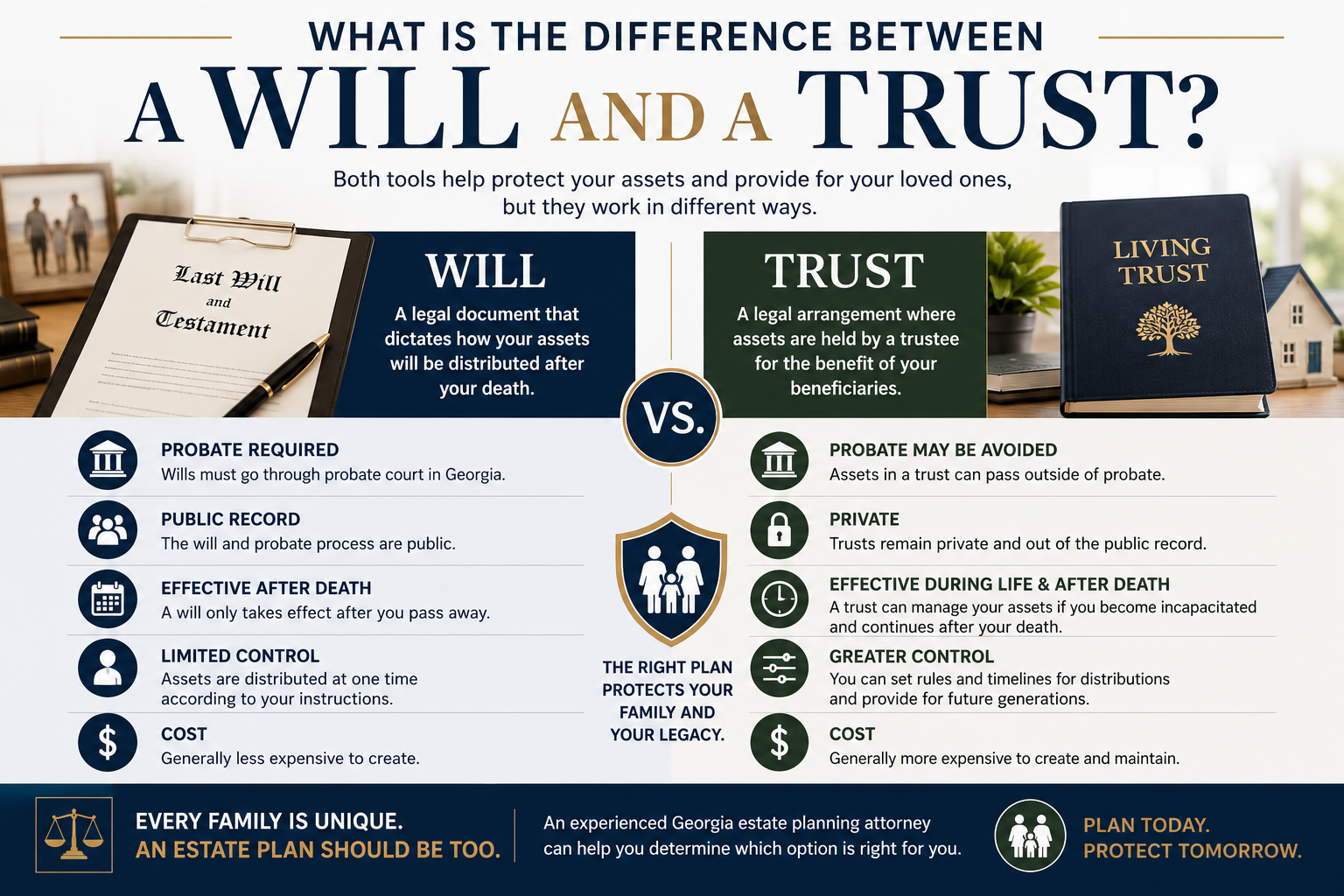
Wills Typically Go Through Probate
Probate is the legal court process used to validate a will and distribute assets after someone passes away.
In Georgia, probate may involve:
- Court filings
- Legal procedures
- Public records
- Delays in asset distribution
Trusts May Help Avoid Probate
Assets properly placed into a trust may bypass probate entirely, allowing beneficiaries to receive assets more efficiently and privately.
Avoiding probate can sometimes reduce delays and administrative burdens for family members.
Privacy
Wills Become Public Record
Because wills typically pass through probate court, the details may become part of the public record.
Trusts Generally Remain Private
Trusts often provide greater privacy because they usually do not require public probate filings.
Asset Management During Incapacity
Wills Only Take Effect After Death
A will generally has no legal authority until the person passes away.
Trusts Can Operate During Lifetime
A trust may help manage financial affairs if the creator becomes incapacitated or unable to handle their own finances.
This can help avoid the need for court-appointed conservatorships in certain situations.
Control Over Asset Distribution
Trusts Can Provide Long-Term Control
Trusts may allow assets to be distributed over time rather than all at once.
For example, a trust may include instructions such as:
- Delayed distributions for young beneficiaries
- Educational funding provisions
- Protection for special needs beneficiaries
- Asset management for future generations
Wills Usually Provide Simpler Distribution
A will generally distributes assets directly after probate is completed.
Do You Need Both a Will and a Trust?
In many estate plans, both documents may work together.
Even individuals with trusts often still have a will, commonly called a “pour-over will,” which helps address assets not formally transferred into the trust.
The right combination depends on factors such as:
- Family structure
- Asset types
- Business ownership
- Real estate holdings
- Privacy concerns
- Long-term planning goals
Estate Planning Is About More Than Assets
Estate planning is not just about wealth. It is also about:
- Protecting your family
- Preserving your wishes
- Planning for emergencies
- Reducing stress for loved ones
- Creating peace of mind
Every family has unique goals and circumstances, which is why personalized legal guidance can be valuable.
Why Work with a Georgia Estate Planning Attorney?
Estate planning documents should be carefully prepared to comply with Georgia law and accurately reflect your wishes.
A Georgia estate planning attorney can help:
- Determine whether a will or trust is appropriate
- Draft legally valid documents
- Create customized estate plans
- Protect family assets
- Plan for incapacity
- Minimize future disputes
Proper planning today can help protect your family for years to come.
Who Should Consider a Trust in Georgia?
Trusts may be especially helpful for individuals who:
- Own significant assets
- Own multiple properties
- Have minor children
- Want to avoid probate
- Have blended families
- Own businesses
- Want greater privacy
- Wish to control long-term asset distribution
However, not every estate plan requires a trust. Some individuals may benefit from a simpler will-based estate plan.
What Happens If You Die Without a Will or Trust in Georgia?
If someone dies without an estate plan in Georgia, state intestacy laws determine how assets are distributed.
This may result in:
- Family disputes
- Delays
- Unexpected asset distribution
- Court involvement
- Increased stress for loved ones
Having a legally valid estate plan can help reduce uncertainty and provide clarity for family members.
Can a Will or Trust Be Challenged?
In some situations, wills and trusts may be contested by family members or interested parties.
Common reasons for disputes may include:
- Questions about mental capacity
- Allegations of undue influence
- Claims of fraud
- Improper execution of documents
Working with an experienced Georgia estate planning attorney may help reduce the risk of future legal challenges.