
Contact Our Firm
770-271-2991
Can Drug Charges Be Dropped in Georgia?
MORE THAN ATTORNEYS
WE'RE ADVOCATES
Can Drug Charges Be Dropped in Georgia?
Facing drug charges in Georgia can be overwhelming and frightening. A criminal conviction may affect your freedom, employment opportunities, reputation, finances, and future. Many people arrested for drug-related offenses immediately ask an important question: “Can drug charges be dropped in Georgia?”
In some cases, yes. Drug charges may be reduced, dismissed, or dropped depending on the facts of the case, the evidence involved, and whether law enforcement followed proper legal procedures. Every criminal case is different, which is why having an experienced Georgia criminal defense attorney review the situation as early as possible is extremely important.
Understanding how Georgia drug cases work can help you better protect your rights and make informed decisions moving forward.
Can Drug Charges Actually Be Dropped?
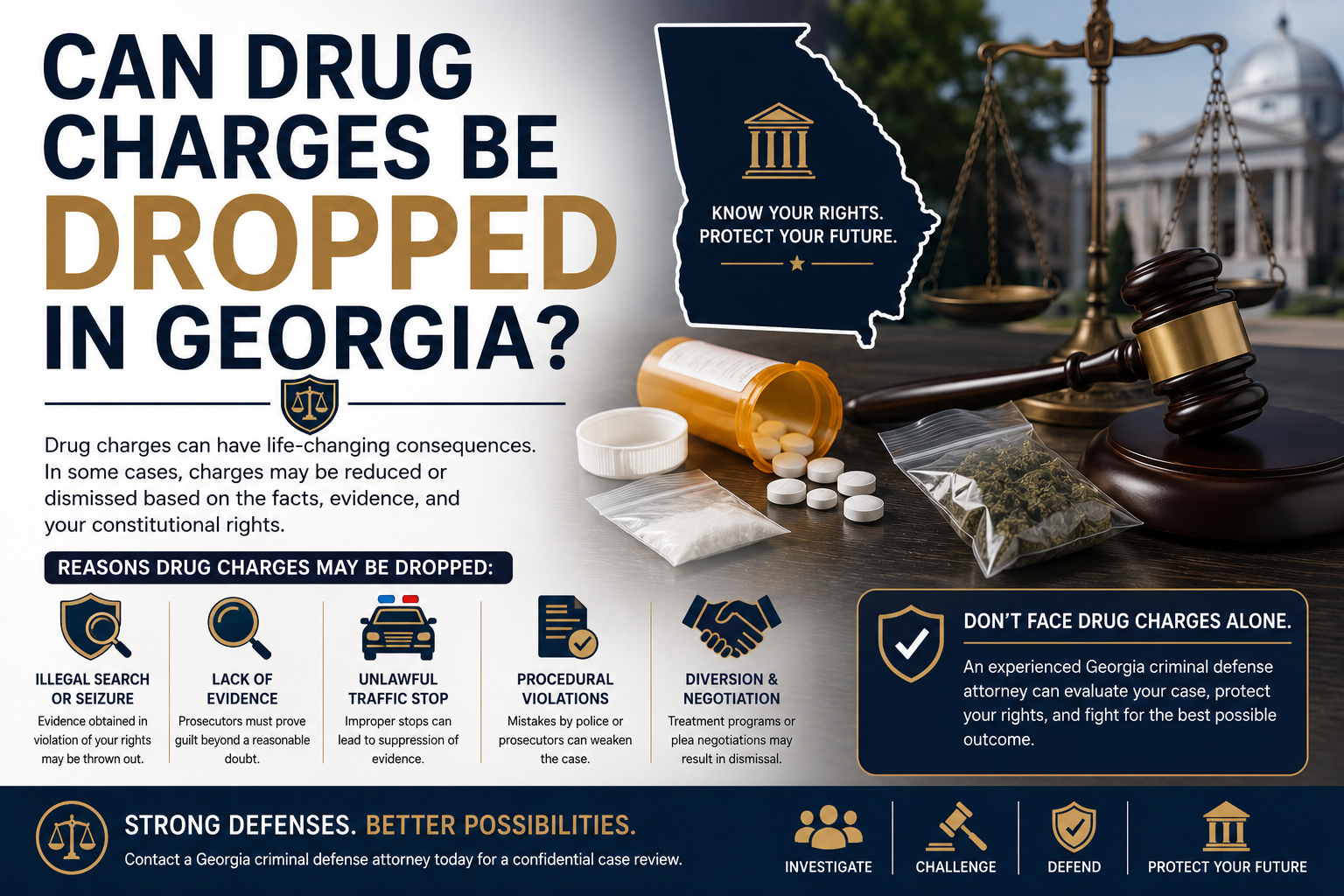
Yes, in certain situations drug charges may be dismissed or reduced. Prosecutors must prove the case beyond a reasonable doubt. If weaknesses exist in the evidence or constitutional violations occurred, charges may not move forward.
Possible reasons drug charges may be dropped include:
- Illegal search and seizure
- Lack of evidence
- Unlawful traffic stops
- Mishandling of evidence
- Violations of constitutional rights
- Witness credibility issues
- Problems with lab testing
- Diversion or treatment program eligibility
A skilled defense attorney may identify legal issues that could significantly impact the prosecution’s case.
Illegal Search and Seizure
One of the most common defenses in Georgia drug cases involves unlawful searches.
Under the Fourth Amendment, law enforcement officers generally must follow strict legal procedures when conducting:
- Traffic stops
- Vehicle searches
- Home searches
- Personal searches
If evidence was obtained illegally, a defense attorney may file a motion to suppress the evidence. If critical evidence is excluded, prosecutors may be forced to dismiss or reduce the charges.
Lack of Evidence
The prosecution must prove that the accused knowingly possessed or controlled the illegal substance.
In some cases:
- Drugs may belong to another person
- The accused may not have known the substance existed
- The prosecution may lack sufficient proof of possession
Weak or circumstantial evidence can sometimes create opportunities for dismissal or reduced charges.
Problems with Traffic Stops
Many Georgia drug arrests begin with traffic stops. If police lacked reasonable suspicion or probable cause for the stop, evidence discovered afterward may be challenged in court.
An attorney may examine:
- Dashcam footage
- Bodycam footage
- Police reports
- Search procedures
- Officer conduct
Improper police procedures can significantly affect a criminal case.
Every Drug Case Is Different
There is no guarantee that drug charges will be dropped, but many cases involve legal defenses or procedural issues worth investigating. The sooner an attorney begins reviewing the facts, the more opportunities may exist to protect your rights and build a strong defense strategy.
Whether you are facing misdemeanor possession charges or serious felony drug allegations, understanding your legal options is critical.
Common Drug Charges in Georgia
Georgia law includes a wide range of drug-related offenses. Charges may involve:
- Drug possession
- Possession with intent to distribute
- Drug trafficking
- Prescription drug offenses
- Marijuana charges
- Drug paraphernalia
- Manufacturing controlled substances
The severity of penalties often depends on:
- The type of substance
- Quantity involved
- Prior criminal history
- Location of the alleged offense
- Whether distribution is alleged
Drug crimes can be charged as misdemeanors or felonies depending on the circumstances.
Diversion Programs and First-Offender Opportunities
Some individuals facing drug charges in Georgia may qualify for diversion programs, treatment options, or first-offender programs.
Depending on the county and circumstances, successful completion of these programs may result in:
- Reduced charges
- Case dismissal
- Avoidance of a criminal conviction
Eligibility often depends on:
- Criminal history
- Type of offense
- Amount of drugs involved
- Whether violence or weapons were involved
Plea Negotiations
In some cases, prosecutors may agree to reduce drug charges through plea negotiations.
Possible outcomes could include:
- Reduced charges
- Reduced penalties
- Probation
- Drug treatment requirements
- Alternative sentencing arrangements
Every case is unique, and outcomes depend heavily on the specific facts involved.