Contact Our Firm
770-271-2991
Do Small Businesses
Need Contracts?
MORE THAN ATTORNEYS
WE'RE ADVOCATES
Do Small Businesses
Need Contracts?
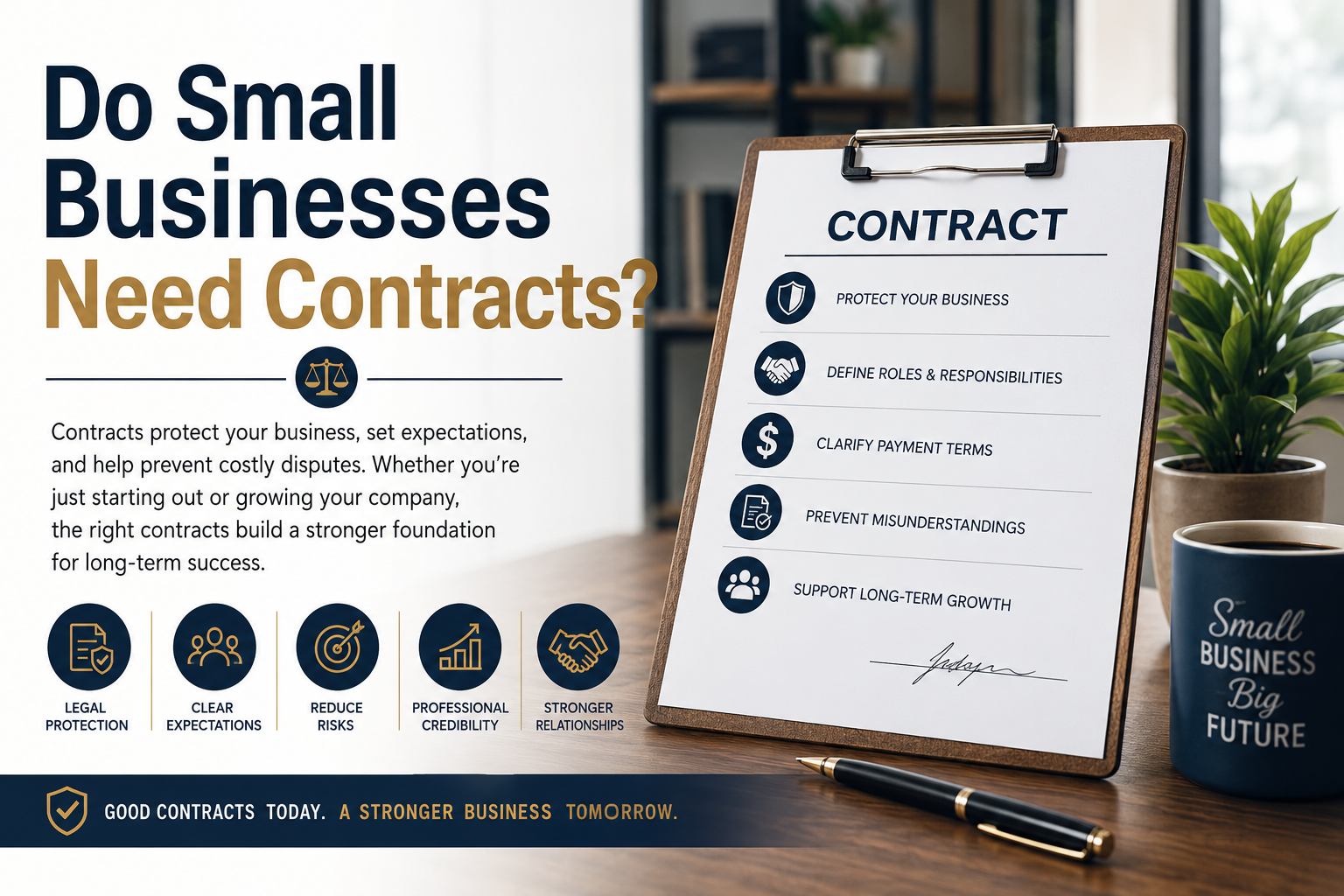
Running a small business often means building relationships based on trust, handshakes, and verbal agreements. While trust is important, relying solely on verbal promises can create serious legal and financial risks. Whether you own a startup, family business, contractor service, retail shop, consulting company, or online business, having clear written contracts is one of the smartest ways to protect your company, reputation, and future growth.
Small business contracts help define expectations, reduce misunderstandings, and provide legal protection if disputes arise. From client agreements and vendor relationships to employee contracts and partnership agreements, properly drafted contracts can help small businesses operate more confidently and professionally.
Why Contracts Matter for Small Businesses
Many small business owners believe contracts are only necessary for large corporations. In reality, small businesses are often more vulnerable to financial loss because they may not have the resources to absorb major disputes or unpaid invoices.
A well-written business contract can help:
- Clearly define services and responsibilities
- Outline payment terms and deadlines
- Reduce misunderstandings between parties
- Protect confidential information
- Establish timelines and deliverables
- Clarify ownership of work or intellectual property
- Limit liability and legal exposure
- Provide options for dispute resolution
Without written agreements, small businesses may face costly disagreements that become difficult to prove in court.
Common Types of
Small Business Contracts
Every business is different, but there are several common contracts that many small businesses should consider using regularly.
Client Service Agreements
A client service agreement outlines the work being performed, pricing, payment schedules, deadlines, and expectations. These contracts are especially important for:
- Marketing agencies
- Web design companies
- Consultants
- Contractors
- Freelancers
- Cleaning companies
- Home service businesses
Clear client contracts help avoid disputes over scope changes, missed payments, and project timelines.
Independent Contractor Agreements
If your business hires freelancers or subcontractors, an independent contractor agreement helps clarify the relationship and protect your business from employment classification issues.
These agreements often address:
- Payment terms
- Project ownership
- Confidentiality
- Non-disclosure obligations
- Deadlines and expectations
Partnership Agreements
Starting a business with friends or family members without a written partnership agreement can create serious problems later. Partnership agreements help establish:
- Ownership percentages
- Profit sharing
- Management responsibilities
- Voting rights
- Exit procedures
- Dispute resolution processes
Even businesses with strong personal relationships benefit from clear written expectations.
Employee Agreements
Employee contracts and workplace policies can help businesses maintain consistency and reduce legal risks. Depending on the business, agreements may include:
- Employment terms
- Confidentiality clauses
- Non-compete provisions
- Company policies
- Benefits information
Vendor and Supplier Agreements
Businesses that rely on suppliers, distributors, or third-party vendors should use contracts that outline pricing, delivery expectations, timelines, and responsibilities if problems occur.
Can Verbal Agreements Hold Up in Court?
In some situations, verbal agreements may be legally enforceable. However, proving the details of a verbal agreement can be extremely difficult. Courts generally prefer written documentation because it provides clear evidence of what both parties agreed to.
Even a simple written contract can offer far greater protection than relying on memory or text messages alone.
When Should a Business Contact an Attorney?
Small business owners should consider speaking with a business attorney when:
- Starting a new business
- Forming a partnership
- Hiring employees or contractors
- Entering large client agreements
- Negotiating vendor relationships
- Expanding operations
- Resolving business disputes
- Reviewing existing contracts
Having legal guidance early can often help prevent larger problems later.
What Can Happen
Without a Contract?
Operating without contracts can expose small businesses to unnecessary risks. Common problems include:
- Customers refusing to pay
- Scope creep on projects
- Disputes over deadlines
- Misunderstandings about services
- Ownership disputes over creative work
- Vendor disagreements
- Partnership conflicts
- Difficulty enforcing verbal agreements
When disputes arise, written contracts often become critical evidence that helps establish the original agreement between parties.
Protect Your Business with Strong Contracts
Contracts play a major role in protecting small businesses from financial loss, misunderstandings, and unnecessary legal disputes. Whether your business is just getting started or continuing to grow, clear written agreements can provide peace of mind and help establish a stronger foundation for success.
Working with an experienced business law attorney can help ensure your contracts are legally sound, customized to your business, and designed to protect your interests both now and in the future.