
Contact Our Firm
770-271-2991
How Is Child Custody Determined in Georgia?
MORE THAN ATTORNEYS
WE'RE ADVOCATES
How Is Child Custody Determined in Georgia?
Child custody cases can be some of the most emotional and challenging legal matters families face. Whether parents are going through a divorce, separation, legitimation action, or custody dispute, one of the most common questions is: “How is child custody determined in Georgia?”
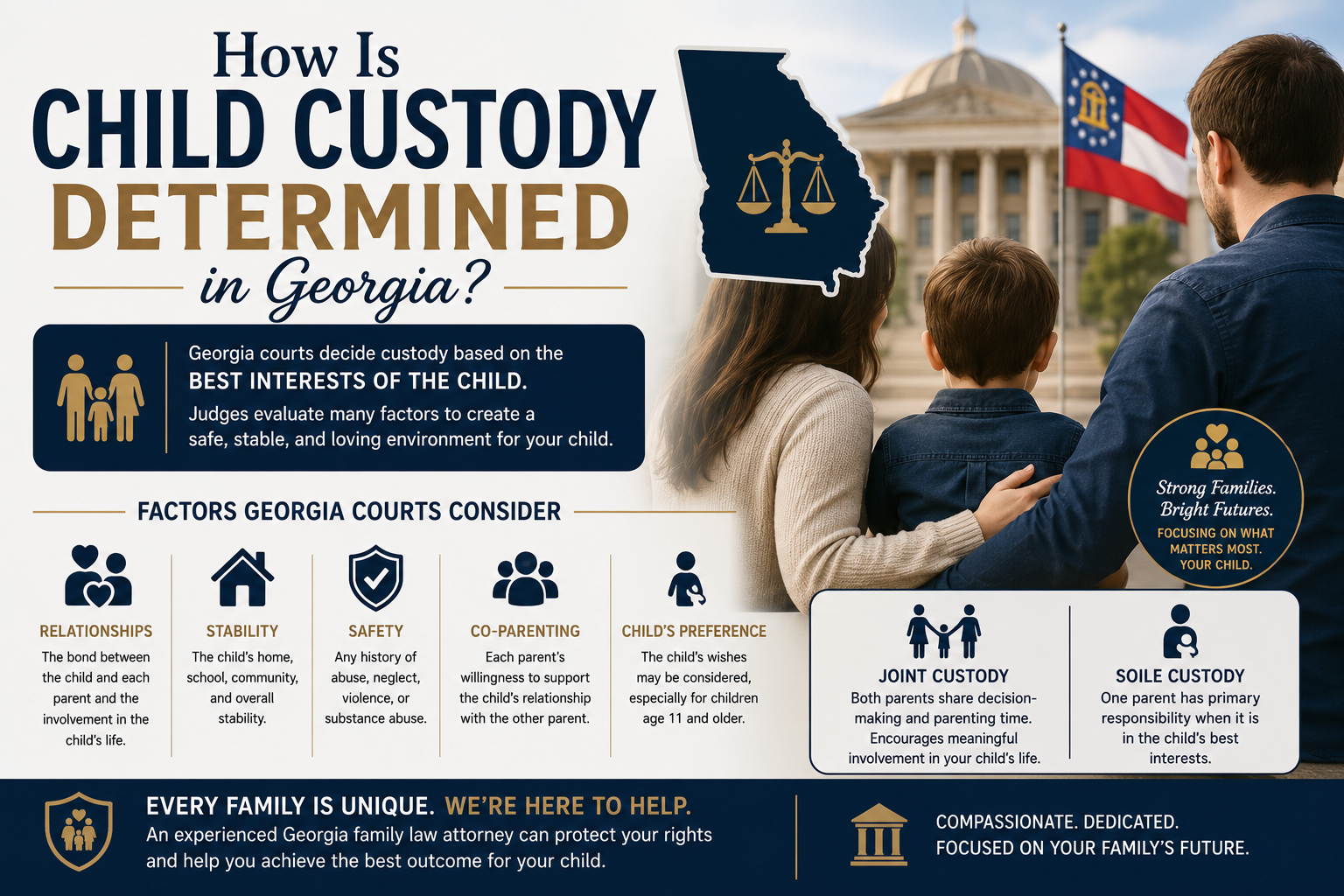
Georgia courts focus primarily on one important standard when making custody decisions: the best interests of the child. Judges carefully evaluate many factors to determine what type of custody arrangement will best support the child’s emotional, physical, educational, and overall well-being.
Understanding how Georgia child custody laws work can help parents better prepare for the legal process and make informed decisions about their family’s future.
Understanding Child Custody in Georgia
In Georgia, child custody generally involves two main categories:
- Legal custody
- Physical custody
Both forms of custody can be awarded jointly or solely depending on the circumstances of the case.
What Is Legal Custody?
Legal custody refers to a parent’s authority to make important decisions regarding the child’s life.
These decisions may include:
- Education
- Healthcare
- Religious upbringing
- Extracurricular activities
- General welfare decisions
Joint Legal Custody
Georgia courts often favor joint legal custody when both parents can effectively cooperate and communicate regarding major decisions affecting the child.
Sole Legal Custody
In some situations, one parent may receive sole legal custody if the court determines joint decision-making would not be in the child’s best interests.
What Is Physical Custody?
Physical custody refers to where the child primarily lives and the parenting time schedule between parents.
Joint Physical Custody
Joint physical custody allows both parents to share substantial parenting time with the child, although schedules may not always be exactly equal.
Sole Physical Custody
One parent may receive primary physical custody while the other parent receives visitation or parenting time rights.
What Happens If a Parent Violates a Custody Order?
Violating a custody order can have serious legal consequences in Georgia.
Possible consequences may include:
- Contempt of court
- Fines
- Changes to custody arrangements
- Make-up visitation
- Attorney’s fees
Parents should follow court orders carefully and seek legal guidance before making major custody-related decisions.
Do Fathers Have Equal Custody Rights in Georgia?
Yes. Georgia courts do not automatically favor one parent based on gender. Fathers may pursue custody and visitation rights just like mothers.
However, unmarried fathers may need to establish legal parental rights through legitimation before seeking custody or visitation.
Why Child Custody Decisions Matter
Custody arrangements can impact nearly every aspect of a child’s life, including:
- Emotional well-being
- Educational stability
- Family relationships
- Daily routines
- Long-term development
Because these decisions are so important, courts carefully evaluate each family’s circumstances before issuing custody orders.
How Does Georgia Handle Parenting Plans?
Georgia courts typically require parents to submit a parenting plan in custody cases.
A parenting plan often outlines:
- Weekly visitation schedules
- Holiday schedules
- Vacation arrangements
- Transportation responsibilities
- Communication guidelines
- Decision-making procedures
Well-structured parenting plans can help reduce future disputes and provide stability for children.
What Happens if Parents Cannot Agree on Custody?
If parents cannot reach an agreement, the court may intervene and make custody decisions after reviewing evidence and hearing testimony.
The court process may involve:
- Mediation
- Guardian ad litem investigations
- Custody evaluations
- Temporary hearings
- Final custody trials
Because custody cases can significantly impact families for years to come, legal representation is often important.
Can Child Custody Orders Be Modified?
Yes. Georgia custody orders may sometimes be modified if there has been a material change in circumstances affecting the child’s welfare.
Examples may include:
- Relocation of a parent
- Changes in the child’s needs
- Substance abuse concerns
- Significant changes in living situations
- Violations of existing custody orders
Courts again evaluate whether the requested modification serves the child’s best interests.
How Can a Georgia Family Law Attorney Help?
Child custody disputes can become highly emotional and legally complex. An experienced Georgia family law attorney can help:
- Protect parental rights
- Develop parenting plans
- Negotiate custody agreements
- Present evidence in court
- Pursue custody modifications
- Handle emergency custody matters
- Advocate for the child’s best interests
Legal guidance can help parents navigate the process more effectively while working toward stable solutions for their children.